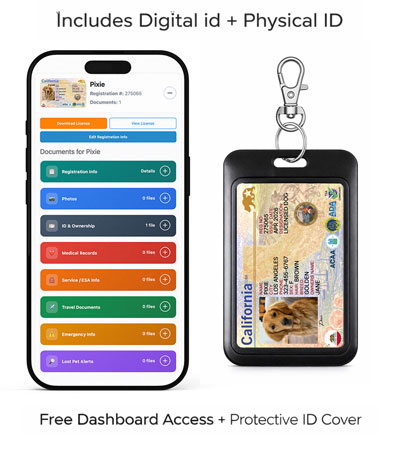
Polk County Dog Registration Information
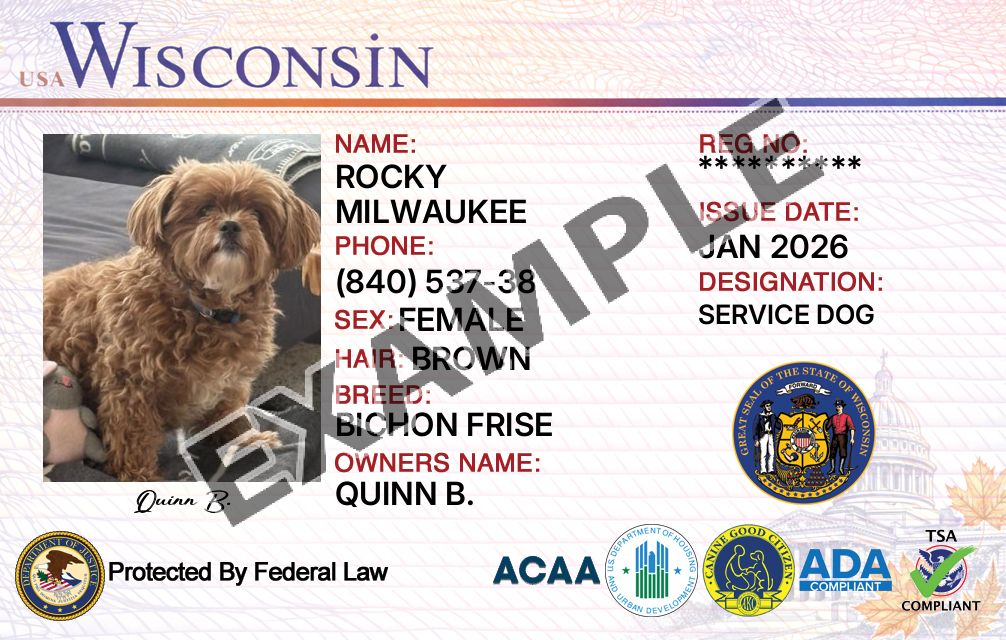
Service Dogs and Emotional Support Animals in Polk, Wisconsin
If you’re asking, “where do I register my dog in Polk County, Wisconsin for my service dog or emotional support dog?” the most important thing to know is this: in Wisconsin, dog “registration” is generally the same thing as getting a local dog license (often tied to rabies vaccination), and it’s usually handled by your city, village, or town clerk—not by a private registry.
A service dog or an emotional support animal (ESA) may still need a dog license in Polk County, Wisconsin based on where you live. “Service dog status” and “ESA status” are legal concepts under different laws and do not replace licensing requirements. This page explains how local licensing works, what rabies documentation is typically required, and which official offices can help you get started.
Where to Register or License Your Dog in Polk County, Wisconsin
Because licensing is often handled at the county or city level, below are several example official offices within Polk County, Wisconsin that residents commonly contact for dog licensing, animal control questions, or rabies-related enforcement guidance. Availability can vary by where you live (city vs. town vs. village), so use these as starting points and confirm the correct office for your home address.
Official offices (examples within Polk County)
| Office | Address | Contact | Hours |
|---|---|---|---|
|
Amery City Hall
City Clerk / City Hall (dog licensing info provided by city)
|
104 Maple St W, Suite A
Amery, WI 54001
|
Phone: 715-268-7486
City Administrator phone: 715-268-3411
Clerk-Treasurer phone: 715-268-3410
Email: (available via “Email City Hall” on the official site)
|
Mon–Thu: 7:00 a.m. – 5:00 p.m.
Closed Fridays
|
|
City of St. Croix Falls — City Hall (Administration / Clerk)
City Clerk office (often handles licensing and local records)
|
710 Hwy 35 South
St. Croix Falls, WI 54024
|
Phone: 715-483-3929
Email: info@cityofstcroixfalls.com
Clerk email: clerk@cityofstcroixfalls.com
|
Mon–Fri: 8:00 a.m. – 4:30 p.m.
|
|
Polk County Health Department
Public health guidance (rabies and bite reporting coordination may involve multiple agencies)
|
100 Polk County Plaza, Suite 180
Balsam Lake, WI 54810
|
Phone: 715-485-8400
Email (Health Officer): jean.schultz@co.polk.wi.us
|
Office hours vary (call ahead)
|
About county animal control vs. local licensing
Many residents searching for an animal control dog license Polk County, Wisconsin discover that the enforcement side (animal control, stray handling, bite investigations) may be coordinated at a county or sheriff level, while the license purchase/issuance is still commonly handled locally through clerks or through authorized channels. When in doubt, your local clerk can tell you the correct procedure for your address.
Overview of Dog Licensing in Polk County, Wisconsin
What “registering your dog” usually means
In everyday conversation, people often say “register my dog,” especially when they have a working animal or assistance animal. In practice, the official step you’re usually looking for is a dog license in Polk County, Wisconsin. A license is a local government record (and often a tag) that helps identify the dog, shows compliance with rabies vaccination rules, and supports local animal control services.
Rabies vaccination is a core requirement
In Wisconsin, rabies vaccination rules generally require that dogs be vaccinated by a veterinarian by a certain age and maintained with timely boosters. Local licensing typically requires proof of current rabies vaccination (for example, a rabies certificate from the veterinarian). If you’re trying to figure out where to register a dog in Polk County, Wisconsin, expect the office to ask for your rabies documentation before they can issue a license or tag.
Licensing applies even if your dog is a service dog or ESA
A dog’s legal classification—pet, service dog, or emotional support animal—does not automatically exempt it from local licensing. In other words, you may still need to license your dog through your municipality, even if your dog assists with a disability or supports a health-related need.
How Dog Licensing Works Locally in Polk County, Wisconsin
Step 1: Identify your licensing authority (city, village, or town)
Polk County includes multiple municipalities (cities, villages, and towns). Most residents will license their dog through the local clerk’s office for the municipality where they live. For example, if you live inside a city’s limits, you typically license through that city’s City Hall. If you live in a town area, the Town Clerk is often the point of contact.
Step 2: Gather documentation
When you apply for a local dog license, offices commonly request:
- Proof of rabies vaccination (rabies certificate from a veterinarian)
- Owner identification
- Proof of residency (if required by your local office)
- Payment for licensing fees (fees vary by municipality and may depend on whether the dog is spayed/neutered)
If you are licensing a dog for the first time in a new municipality (for example, after moving), it’s smart to call ahead and ask exactly what that clerk’s office needs so you don’t have to make multiple trips.
Step 3: Apply and obtain the license/tag
Depending on the municipality, licensing may be handled in person at City Hall, by mail, or via an approved local process. Once issued, you may receive a license document and/or a tag. Many local ordinances require that the dog wear the license tag while off your property or whenever required by ordinance.
Renewals, changes, and keeping records current
Dog licensing is typically renewed periodically (often annually). Keep your rabies certificate up to date and notify your local office if your address changes, your dog’s status changes, or you need a replacement tag.
Service Dog Laws in Polk County, Wisconsin
Service dog status is not created by a “registration” website
A common point of confusion is the idea of “registering” a service dog through an online registry. For public access rights, what matters is whether the dog meets the legal definition of a service animal under applicable disability law—generally a dog trained to perform specific tasks for a person with a disability. A license issued by a city/town is a dog license, not a “service dog certification.”
Dog license vs. service dog access rights
A local dog license is a government record showing the dog is licensed (often linked to rabies vaccination compliance). A service dog’s legal status relates to disability accommodations and public access rules. These two systems overlap in real life (your service dog may need a local license), but they are not the same thing:
- Dog license: local requirement for dogs kept in the municipality; often includes a tag and fees.
- Service dog status: based on training to do disability-related tasks; affects access and accommodation rules.
Practical tip for Polk County residents
If you’re licensing a service dog, you can usually follow the same licensing process as any other dog owner: contact your local clerk’s office, provide rabies vaccination proof, and pay the applicable fee unless a specific local policy provides an exemption. Ask your clerk directly if your municipality offers any fee reduction or documentation preferences for service dogs (and keep your request focused on licensing—service dog legal access is a separate topic).
Emotional Support Animal Rules in Polk County, Wisconsin
What an ESA is (and what it is not)
An emotional support animal (ESA) is typically an animal that provides comfort that helps with symptoms or effects of a disability. Unlike a service dog, an ESA is not necessarily trained to perform a specific task. Because of this distinction, ESAs generally do not have the same public access rules as service dogs.
ESA status does not replace licensing
Even if your dog is an ESA, you usually still need a dog license in Polk County, Wisconsin through your local municipality if that municipality requires licensing. In other words, if you’re searching where to register a dog in Polk County, Wisconsin because your dog is an ESA, the answer is still: start with your city/village/town clerk and be prepared to show rabies vaccination proof.
Housing questions vs. licensing questions
Many ESA questions come from housing situations. Keep licensing separate from housing accommodations: licensing is about local compliance and rabies documentation, while housing accommodations depend on the applicable housing rules and documentation. If your immediate goal is a license/tag, focus on local licensing requirements first.
Frequently Asked Questions
Start with your local city/village/town clerk’s office where you live, because most dog licensing is handled locally. If you are in a city, the city hall clerk is often the correct contact. If you live in a town, the town clerk is typically the correct office. A service dog or ESA generally follows the same licensing process as any other dog, including providing rabies vaccination proof.
No. A dog license is a local government requirement (often connected to rabies vaccination compliance). A service dog is defined by disability law and task-training, which affects access and accommodations. You can have a properly licensed dog that is not a service dog, and you can have a service dog that still needs a local license/tag.
Requirements vary by municipality, but commonly include:
- Proof of rabies vaccination (certificate from a veterinarian)
- Owner identification
- Proof of residency (if requested)
- Payment of the licensing fee
Many local ordinances require licensing regardless of whether the dog leaves your property. Also, licensing and rabies documentation are important if your dog is lost, if there’s a bite incident, or if an animal control officer needs to verify vaccination status. Contact your local clerk to confirm your specific municipal requirement.
A service dog is trained to perform specific tasks for a person with a disability. An emotional support animal provides comfort that helps with a disability but is not necessarily trained for specific tasks. This difference affects where the animal is allowed and what rules apply—while both may still need local licensing.
Register A Dog In Other Wisconsin Counties
Select your county below to get started with your dog’s ID card. Requirements and license designs may vary by county, so choose your location to see the correct options and complete your pup’s registration.
- Adams County Dog Registration
- Ashland County Dog Registration
- Barron County Dog Registration
- Bayfield County Dog Registration
- Brown County Dog Registration
- Buffalo County Dog Registration
- Burnett County Dog Registration
- Calumet County Dog Registration
- Chippewa County Dog Registration
- Clark County Dog Registration
- Columbia County Dog Registration
- Crawford County Dog Registration
- Dane County Dog Registration
- Dodge County Dog Registration
- Door County Dog Registration
- Douglas County Dog Registration
- Dunn County Dog Registration
- Eau Claire County Dog Registration
- Florence County Dog Registration
- Fond du Lac County Dog Registration
- Forest County Dog Registration
- Grant County Dog Registration
- Green County Dog Registration
- Green Lake County Dog Registration
- Iowa County Dog Registration
- Iron County Dog Registration
- Jackson County Dog Registration
- Jefferson County Dog Registration
- Juneau County Dog Registration
- Kenosha County Dog Registration
- Kewaunee County Dog Registration
- La Crosse County Dog Registration
- Lafayette County Dog Registration
- Langlade County Dog Registration
- Lincoln County Dog Registration
- Manitowoc County Dog Registration
- Marathon County Dog Registration
- Marinette County Dog Registration
- Marquette County Dog Registration
- Menominee County Dog Registration
- Monroe County Dog Registration
- Oconto County Dog Registration
- Oneida County Dog Registration
- Outagamie County Dog Registration
- Ozaukee County Dog Registration
- Pepin County Dog Registration
- Pierce County Dog Registration
- Portage County Dog Registration
- Price County Dog Registration
- Racine County Dog Registration
- Richland County Dog Registration
- Rock County Dog Registration
- Rusk County Dog Registration
- Sauk County Dog Registration
- Sawyer County Dog Registration
- Shawano County Dog Registration
- Sheboygan County Dog Registration
- St. Croix County Dog Registration
- Taylor County Dog Registration
- Trempealeau County Dog Registration
- Vernon County Dog Registration
- Vilas County Dog Registration
- Walworth County Dog Registration
- Washburn County Dog Registration
- Washington County Dog Registration
- Waukesha County Dog Registration
- Waupaca County Dog Registration
- Waushara County Dog Registration
- Winnebago County Dog Registration
- Wood County Dog Registration